Showing posts with label Universal Law. Show all posts

Wednesday, December 31, 2014

A Horse With No Name


Every man is divinity in disguise.
It is God playing the fool.
~Emerson
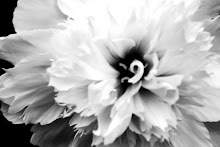
“I See You” by MHopkins © 2014
Now I’ve been up close and personal with some animals—dogs, cats, monkeys, raccoons, bears, even some endangered species like the lynx and bobcat that visit my land—but never a horse...in the middle of the road...on a dark and snowy night.
I suppose stranger things have happened.
‘Twas the night before the night before Christmas, and I was on my way home from a holiday musical extravaganza sponsored by the Unity Church of Boulder.
With a new moon rising and snow clouds hanging low in the sky, visibility was limited as I wound my way up the familiar stretch of Boulder Canyon toward my home. Sticking close to the canyon wall, I drove through the snow, all the while contemplating the meaning of “Unity.” What does it really mean—this concept of oneness?
Suddenly, out of nowhere, I came upon a horse running wildly back-and-forth across the narrow, two-lane road, sliding as she maneuvered uphill in the snow. The unexpected sight of her scared me half to death; she was scared, too. So I stopped and turned on my hazard lights, not sure what to do next, but this much I knew: Boulder Canyon is no place for a horse, especially at night when it’s snowing.
For a brief moment I watched her and, she, looking over her shoulder, watched me. And then I did the only thing I could think of to do: I rolled down my window and talked to her.
“Don’t be scared . . . I’m not going to hurt you,” I said softly. “Please, you have to get out of the road before you cause an accident.”
She stopped running, eyeing me suspiciously.
“Please, come here . . . you have to get out of the road,” I pleaded.
Slowly, she turned and walked toward me.
“Come here, girl, I’m not going to hurt you. I want to help you,” I continued, coaxing her with promises of safety while holding out my hand to her through the open window.
She approached my car, towering high above it, and lowered her head to meet me at eye level. As I reached out to touch the side of her face I saw something in her eyes that moved me. In that moment, I caught a glimpse of her spirit and I understood with acute awareness what I had only intellectualized until then—that the same life force that moved through her flowed through me. The same vital energy that animated her form, gave life to mine, albeit in different packages.
It was as if time stood still for me and that horse on the canyon. I whispered, “I see you.”
Just then a car came barreling around the corner and slammed on the brakes. My new friend freaked out and started running around my car. She had no bridle or halter to grab, so there was little I could do but work out a plan with the man in the car behind me to get the horse out of the road. We agreed—he would stay with the horse and warn oncoming cars with flashing lights, and I would drive the remaining three miles up the canyon and get the local police to help us.
The rest of the story played out like a scene from The Andy Griffith Show. I ran into the police station and exclaimed with excitement: “There’s a horse in the middle of the canyon.” To which the officer replied, “Yeah, what does the horse look like?”  
Four legs a tail and a gorgeous mane?  So I described the horse and told them of the man I had left behind on the canyon waiting for help, and I discovered that the officers knew the horse—or at least they knew the horse’s guardian—and they followed me out to remedy the situation. The horse was rescued. Crisis averted. It was surreal.
Later, as I pulled into my driveway, I could not shake the intensity of my experience with that horse—the moment of connection with her living spirit. What a precious gift to see and truly understand the essence of this spiritual principle, which reminds us that we are all unique expressions of the same Creative Source, interconnected with everyone and everything else. Call that Source whatever you like—God, Allah, Great Spirit, Creator, the “Big C”—it matters not, because there is only One from which all things flow.
You are at once a beating heart
and a single heartbeat in the body called humanity.
~Dr. Wayne Dyer
Oneness is a concept emphasized by many, and has been, perhaps, one of the toughest ideas for me to wrap my mind around. It is simple enough in theory to say that we’re all one, but when I see my neighbor in his yard shoveling snow and I’m standing across the street in my own yard—physically separate from him—it’s hard to make the connection. It is especially challenging for me to find the common thread when I look at the most vile criminal offenders—rapists, murderers and child molesters—for it is here that I am most keen to distinguish myself in every conceivable way. It’s even more difficult to conceptualize my oneness with the creek flowing through my back yard or the horse in the middle of the canyon, particularly when I consider the differences in our physical constitutions.
To grasp this concept requires that we open our minds and see beyond our physical limitations. Analogies help. For instance, if I pour wine from a bottle into your glass, what do you have? A glass of wine—the same wine that’s still in the bottle, only now a portion of it has been transferred to another container. The same is true of me, the horse and the vital energy that flows through us, bringing our “containers” to life. True, our containers are quite different and come with unique bells and whistles—in that way, we’re definitely not the same—but we come from One, which makes us all related in a wonderfully abstract way.
Spiritual teachers and mystics across time have urged us to consider that what we do to one we do to all; that we cannot hurt another without also, in some way, hurting ourselves. And while many of us may find it easy to extend that thought pattern and courtesy to a handful of people we're close to (our immediate family and loved ones) how often do we reach out to help strangers or animals or the environment in the spirit of unity and oneness?
And so this was my Gift of the Magi—wisdom and recognition shared between a girl and a horse on a dark canyon road, and now I pass it on to you.
As we begin a new year, may you connect with the peace that comes with understanding your connection to the One.

Sunday, October 19, 2014

Seeds of Change


You know how if you plant seeds,
it takes time for the fruits of the seeds
to push up through the ground’s surface?
Same goes for the changes you want to manifest.
They take time to see.
~Karen Salmansohn

The thing about seeds is that they don’t grow overnight. You can plant them, water them—even talk to them—and you get nothing, or at least that’s how it seems. But there’s business going on underground: roots are forming, intertwining with others for mutual support and growth, while decisions are being made about how many flowers, or apples, or tomatoes will grow from that seed. Then one day, just when you thought nothing was happening—BAM! Signs of life emerge from the ground, reaching for the sunlight. Suddenly, it all makes perfect sense.

So it is with you and me.  Dreams are our seeds of change.  Words are also seeds, and when dropped into the ether, whether spoken or held deeply in our spirit, they grow and bring forth their kind.  Nothing grows without a seed.  Nothing changes without a dream.  And as we move deeper into fall, I’m reminded how temporary it all is. Seasons change. People come and go. Time marches on, waiting for no one, yet moving us forward in rhythm with the silent longings of our hearts.

Just as the Aspen leaves turn green, then gold, falling to the ground with winter’s early warning, I’m reminded that we, too, must first die to one life before experiencing the new growth of spring.  We must clear space; shed a part of what we know and make room for what we want to create. We know it’s coming; we’ve longed for it.  Yet so often we fear the change we seek.

Consider the Aspen—do you think it spends the winter fearing that it will never again experience the joy of having beautiful leaves adorn its branches? Questioning the essence of its being? Wishing things were different? Regretting having done what is in its nature to do? I think not.  It’s rather like they are hibernating, conserving energy for the new cycle of life that will emerge come spring.

Why should it be any different with people? Consider what you do between cycles of change, waiting for your seeds to grow. How do you fill your time? What do you give your energy to?

When you’re moving through change, yet you can’t quite see the end result, do you live in fear that where you are is all your life will ever be? Or do you get busy doing what you can to organize yourself, energize your thoughts, and develop a good plan to support your change as you move forward?

All changes, even the most longed for, 
have their melancholy;
for what we leave behind is part of ourselves;
we must die to one life before we can enter into another.
~Anatole France

Even when change comes from a conscious choice to restructure some aspect of our life—to let go of a dead-end relationship, change careers, start a family, create a new business or embark on a great travel adventure—it is tempting to spend our time in an anxious state, questioning our decisions, worrying that it will all go horribly wrong; expecting signs of new life to emerge immediately on the heels of our decision to change, just after planting the seeds.

But if we could step back and observe ourselves from a distance, we would see that we aren’t done yet: We are still moving toward a destination that we can’t quite see because we’re consumed with the day-to-day experience of our change, slowed by the natural timing of things; like watching seeds grow underground.

Remember: To everything there is a reason, a season, a cycle and right timing. Work with the energy of change, not against it. Be patient and mindful of life’s rhythms.  Use down time to improve where you can, turning weaknesses into strengths.  And prepare yourself, for a bright new tomorrow will emerge just as surely as the snow falls on changing leaves.

Will you be ready?

Tuesday, August 19, 2014

In the Meantime

Here is a test
to find if your mission on Earth is finished:
if you’re alive, it isn’t.
~Richard Bach, Illusions


Statistics are out:  “10 out of 10 people will die!”  So said the random card I found on the ground by my gas pump.  Like a splash of cold water to the face, it lifted me right out of my head where I had been stuck worrying about something that I had little control over.  It’s easy to ignore the inevitable when we’re healthy and young and living our dreams, or just caught up in the mechanics of life. But we all have an appointment with death sooner or later, which begs the question:  What happens when we die?  

I am drawn to this issue—life after life—because I can’t wrap my head around the idea that when we die we are finished.  Sure, our bodies return to the earth, entombed or scattered as ashes as we’re reminded of the universal law that energy can neither be created nor destroyed, it simply changes form.  Our loved ones will gather around our caskets and mourn our passing, comforting each other with comments like, “She looks so peaceful,” or “They sure did a good job with him,” staring at the body as if we were in there somewhere.  Yet if ever there’s proof that we’re more than our bodies, it’s in these moments.

When my grandfather passed a few years ago, I had the honor of being with him in his final days.  He was concerned for my grandmother, and asked that we take good care of her, but otherwise, he was ready to go.  He wasn’t afraid.  And as he moved in and out of consciousness, through labored breath, he shared his final thoughts, “We are born with a framework for society . . . or so we think . . . but it’s an illusion . . . there’s the body and the soul . . . but only the soul lives forever.”  It was my greatest spiritual experience, witnessing the soul of a man leave his body in the wake of his words. 

For the better part of a year, I had intense dreams of my grandfather. Not the man who suffered congestive heart failure and passed in his hospice bed, but the vibrant young man he had been when I was a little girl.  At first I would wake up startled when he appeared, and I could never return to my dream.  But in time, I willed myself to talk to him and he revealed some fascinating truths about his life in spirit form.  I’ve often wondered what informed those dreams.

In his book Life After Death:  The Burden of Proof, Deepak Chopra points to talking to the dead and near death experiences (NDEs) as two of six lines of evidence that the soul is real and eternal.  He studied many cases of NDEs, where the person had been pronounced dead and was brought back to life, and he interviewed those patients about their experience.  Intriguing to me was the discovery that across the board, people experienced what they believed.  Christians reported seeing angels and white light and Jesus.  Muslims reported meeting Allah and scenes of Islam.  Those who believed that they had wronged others, or that they had been “bad,” reported an experience of torture and hell.  Those who believed in nothing reported an experience of nothingness.  And so on, weaving the thread between life and death.
  
I know a guy I like to refer to as a “Militant Agnostic.”  “I don’t know and you don’t either” is his motto.  I never understood this thinking.  Sure, evidence based science has its place, but not in the realm of faith.  If there exists even a possibility that there is an afterlife, why not reach for that hope? Why not believe? What do we lose by being open?  Maybe, just maybe, we would be more peaceful and relaxed and far kinder to every living person and thing around us.  Perhaps we would not fear death as we do.

It’s your life.  What will you do in the meantime?

Sunday, March 2, 2014

Stressing the Vine


When we long for life without difficulties,
remind us that oaks grow strong in contrary winds
and diamonds are made under pressure. 
― Peter Marshall


People speak of wanting an easy life.  But how many of us really want it ‘easy’?  If our desire was met and we faced only comfort and ease, wouldn’t we soon become bored?  Where’s the fun in life without challenge?  Where’s the flavor without spice?  Where’s the growth without pruning?  Would we not seek to create our own chaos if chaos didn’t exist, particularly where situations have become stale or too readily assured?  I dare say that we would.
Yet we hear so much about how unhealthy chronic stress is for our bodies.  We need only turn on the news or read a health post on the Internet to discover all of the reasons why we should rid our lives of this toxin.  Constantly faced with demands, frustrations, hassles and deadlines, it seems impossible to break free.  But do we really want to break free?  Might this be where the magic happens?
Consider the life of a wine grape.  While it’s true that many agricultural endeavors require nutrient rich soil to thrive, winemakers worldwide will tell you that when it comes to growing grapes for wine, fertile soil is not always the best.  In fact, most California vineyards are planted in soil that would choke the life out of other crops.  Growers look for nutrient poor or even dry soil that drains well because it forces the vines to extend their roots far into the dirt to find sustenance—stressing the vine—and causing them to direct their energy and sugar into grape clusters instead of leaves, which produces small grape berries.  A handful of tiny grapes will be almost all skin and very little juice, which translates into a rich, concentrated color and flavor in the wine.  For these growers and vintners, the stressed grape is the best grape and produces the superior vintage.
Might we also benefit from a bit of stress on the vine?  In our periods of stress we are called to break out of our complacency, extend ourselves beyond the comfort zone, and direct our energy to find ways to thrive even under the most pressure-filled conditions.  We are given an opportunity to turn our negative stressors into positive ones that help us to grow, remain vital and alive.  We learn to think positive and remain hopeful for better days. We discover how strong and capable we are.  And if we stretch, we learn that humor and laughter are the catalysts that lift us out of our oppression and transform us into the most colorful and delicious versions of ourselves, like the wine grape.
So perhaps what we really mean is that we want an ‘easier’ life, every now and then; a break from worrying that a certain wolf may huff and puff and blow our house down.  If an easier life is what you desire then I suggest you can have it, simply by making up your mind to not dwell on factors that you cannot change and, instead, look for ways to set a positive process in motion; and trust that there is a good reason for this.

Thursday, November 28, 2013

Conspiracy of Love

Blessed is the season,
which engages the whole world
in a conspiracy of love. 
~Hamilton Wright Mabie


Can you feel it—the warm fuzzy glow of good cheer building from the first turkey dinner, jingle-belled advertisement and beautifully wrapped vision of holiday bliss, and reaching a crescendo as we join our families and friends to celebrate the season?  Giddy with the holiday spirit, we’re just a little more kind and a little more forgiving as we move through the days filled with anticipation of . . .

Of what?  What are we looking forward to?  What are we expecting?  What do we really want? 

Kids seem to know with surprising clarity.  “I want an American Girl doll!” “I want a new bike!” “I want chocolate chip cookies!” “I WANT MY MOMMY!”  But how many of these wants are truly needs?  Do they even recognize the difference?  Rarely.  In watching kids flit from one toy to the next we see right through their fly-by-night passions, reaching for this and grabbing for that. 

We forget that adults are not so different, except that we use these long, detailed explanations to rationalize our dubious choices, cleverly disguising the pretenses of our decisions even from ourselves sometimes.  We reach for this and long for that then reach for something else.  Sometimes we get what we want.  And sometimes we reach for what we think we really want only to get it and later discover that it wasn’t so great after all.  Maybe things have changed since we began wanting what we want and we find that it’s no longer relevant when it arrives.  And sometimes when we don’t get what we want it makes us want it even more; an unrequited passion not so easily extinguished.  But how much of what we say we want do we truly need?

Perhaps at the root of every desire is a basic longing—to connect, to love, to be at peace; the hunt for comfort and joy.  Remember this as you move through Thanksgiving, Hanukkah, Christmas, and look for ways to connect with the root of your longing.   

Try this: 

  1. Volunteer!  Get out of yourself and give back to your community!  As Rumi says, there are a thousand ways to kneel and kiss the ground.
  1. Keep it real!  No holiday is perfect and few celebrations rarely resemble the cozy gatherings depicted in commercials and our favorite programs on television.  If your family dynamic has changed or tradition is too hard to satisfy, don’t be afraid to do things a little different each year! Get rid of the pressure!
  1. Take some time for yourself!  Give the gift of your presence.  You can’t be there for others in any real way if you’re not there for yourself so slow down, take a nap, read a book, get a massage, and take some time to reflect on where you’ve been, where you’re going and what you’re thankful for.
  1. Remember what’s important.  It’s easy to lose sight of why we’re doing what we’re doing when we’re so busy baking and buying and wrapping and coming and going.  Take some time to connect with the real reason for the season.

Succumb to the conspiracy of love and you just might find that what you’re looking for has been with you all along.

P.S.  Thanks for sharing the quote Mom!

Saturday, October 19, 2013

LOOK WHERE YOU WANT TO GO

Why would you give your precious life energy . . .
to something you [don’t] want?
~Dr. Wayne Dyer
The Road Less Traveled
Connemara Region, Ireland © 2013 MHopkins
While learning to ride her motorcycle, my mother decided to practice in their neighborhood.  Having made the loop, she topped the hill and came to a stop, preparing to make a left turn.  That’s when she saw it—the neighbor’s mailbox just across the way—and though she tried not to look at the mailbox and, instead, focus on the road before her, as she turned left, eyes still on the mailbox, she veered off course and crashed…into the neighbor’s mailbox; the very thing she wanted to avoid.

There is a golden rule of motorcycle riding that says “look where you want to go.”  Though she knew it in theory, my mother learned this the hard way.  There are many long and complicated theoretical reasons why this rule of riding might be true, but none that make any real sense except the idea of target fixation, which says, in essence, that what you focus on expands. 

And so it is in our every day lives.  How often do we repeat some aspect of the past or dwell on the negative parts of our situation and then find ourselves faced with more of what we don’t want, instead of giving attention to what we would most like to create and then taking small steps each day to make that vision our reality?  Maybe we’re unhappy in our relationship or we dislike our job or we don’t like the extra weight we’re carrying around like a spare tire, yet instead of creating a positive plan of how to get from here to there we focus in on what we don’t like, complaining or feeling sorry for ourselves, repeating the same bad habits, or avoiding the discomfort of change, and so we keep driving our proverbial motorcycles around and crashing into the same mailboxes. 

It is impossible to be angry and laugh at the same time.
Anger and laughter are mutually exclusive
and you have the power to choose either.
~Wayne Dyer

Choice is the essence of our free will, and it is through our choices that we direct the course of our lives.  While we may disagree with the actions of others and even dislike our own circumstances, we have the right, power and opportunity to make choices every day—the attitude we adopt, how we respond to the world around us, where we place our attention, the thoughts we entertain, what we take responsibility for, the meaning we give to the events of our lives, and what or to whom we give our power.  It’s all energy, and the lightness or heaviness of that energy determines much about our physical, mental and spiritual health. 

Take another look down the road you're traveling.  Do you really want to go there?

Wednesday, September 4, 2013

The Bright Side


Promise Yourself . . .

To be so strong that nothing can disturb your peace of mind.  

To talk health, happiness and prosperity to every person you meet.

To make all your friends feel that there is something in them. 

To look at the sunny side of everything and make your optimism come true.
 
To think only of the best, work only for the best and to expect only the best.  

To be just as enthusiastic about the success of others are you are about your own.
 
To forget the mistakes of the past and to press on to the greater achievements of the future. 

To wear a cheerful countenance at all times and give every living creature you meet a smile.  

To give so much time to the improvement of yourself that you have no time to criticize others.
 
To be too large for worry, too noble for anger, too strong for fear, and too happy to permit the presence of trouble.

~The Optimist Creed, Optimist International

I once quit the Optimist Club because it was too negative!

New to the Gulf Coast of Florida, I had looked for a good civic group to join that would be meaningful, engaging, and helpful in learning about my community while meeting like-minded others.  Hey, I’m an optimist, I thought; what better group to join than the Optimist Club!  Then one day, a few months in, the President of the chapter came up with this “brilliant” idea to increase membership:  we would take turns carrying around a brick until each member brought in at least one new member.  Now I’m sure this doesn’t represent all chapters of this wonderful club, but WOW!  What a heavy load!  I barely knew anyone in town—part of the reason I had joined the group in the first place—and after an unsuccessful attempt to get a waiver from this dismal approach, I quit.

Not entirely surprising because I tend to run from the negative, choosing instead those friends and associations that lift me up and inspire with positivity.  A bit of a dichotomy, really, when I consider the way that I have to approach my work as a lawyer—looking at the contract, deal or business strategy with a critical eye, which allows me to consider all potential outcomes—good and bad—and advise my clients of the consequences of their decisions.  Yet for much of my life, when making personal decisions, I brushed aside anything negative, focusing only on the great and wonderful outcomes that would surely follow my next great step.  This is a poor business plan and a terrible life strategy because when things run amok, as they sometimes do, instead of working out as I envision, I have a tough time adjusting to the reality.

I read somewhere that having an over-abundance of optimism in the “it-won’t-happen-to-me” sort of mindset can be detrimental to our sense of wellbeing, and as harmful to longevity as high blood pressure and cholesterol!  In fact, studies have shown that those who operate with extreme optimism experience more difficulty rebounding from set backs, which I have experienced first hand, because we get stuck on a mental track of “I can’t believe that happened to me!  Why me?”

So a little worry can be helpful when channeled into productive action, like having a Plan B or creating a Will or making peace with getting older while you’re still young, or allowing your thoughts to follow the chain of "what if" while maintaining faith that no matter what happens, you're going to be okay—all great building blocks for our peace of mind; and very different from dwelling in the negative, which we know causes excessive stress, impacts our health and affects our mind and spirit in often undesirable and unintended ways.     

What kind of bricks are you carrying?  

Saturday, May 25, 2013

Don't Forget the Whiskey Whore


I had an inheritance from my [grand]father,
It was the moon and the sun.
And though I roam all over the world,
the spending of it is never done. 
~Ernest Hemmingway, For Whom the Bell Tolls

(Artwork by A.L. Childress - year of creation unknown)

My friend Tim took one look at her hanging on my wall and said in his most dramatic, southern drawl, “Well she’s nothing but a whiskey whore…” summing up the scantily clad woman reclined against the sofa with a half-empty bottle of booze on the floor in front of her; and so she became known around our house.  But to my grandfather, she was an erotic gem; painted on a canvas torn from an old World War II military jeep and hidden beneath a bland landscape painted in gray, given to my grandfather as collateral for a $2 loan he made to the artist after the war. 

For years the Whiskey Whore had been concealed beneath that drab landscape, stashed in the basement of my grandfather’s house.  Then one day as we discussed art, I confided that many pieces in my personal collection were erotically inspired from cultures around the world.  He couldn’t resist the temptation to share his secret.  “There’s an erotic painting under there…” he whispered, pointing to the dull gray landscape.  I was certain that I had misunderstood. 

But I hadn’t.  Eager to share his treasure, my grandfather had placed the framed painting face down on the table and removed the back with a screwdriver, gently pulling the layers of canvas apart to reveal the vibrant Whiskey Whore underneath what appeared to be so dull and lifeless.  That’s when he told me the story of how he had won her by default for an unpaid debt.

He gave me the painting that day; he made me carry it out the back door, up the hill and round the house to my car so that my grandmother wouldn’t see.  But she had been looking out the kitchen window as I schlepped through the yard with the painting tucked under my arm and she knew straight away what I was hiding.  A bit of drama followed:  “Why Karl Mason!  What kind of grandfather gives a painting like that to his granddaughter?  I’ve never heard of such!”  Grandpa calmed her down as only he could while I quietly placed the painting in my car.  We never discussed it again.

Yet this controversial work of art has become so much more to me than paint on canvas.  It reminds me of the many layers of life waiting to be revealed—the vibrant colors of the soul—and the gentle wisdom my grandfather shared with me so freely in the time we spent together.  And though I’ve traveled the world and discovered my own great fortunes, this simple painting on tattered canvas hangs above our fireplace as a gentle reminder of the depth and breadth that is life.

It has also become a metaphor for remembering what matters most—is it the painting or the story behind the painting?  As my sweetheart reminds me from time-to-time when I get caught up in the chaos of life:  Don’t forget the Whiskey Whore!